Showing posts with label bolsheviks. Show all posts

Friday, September 2, 2011

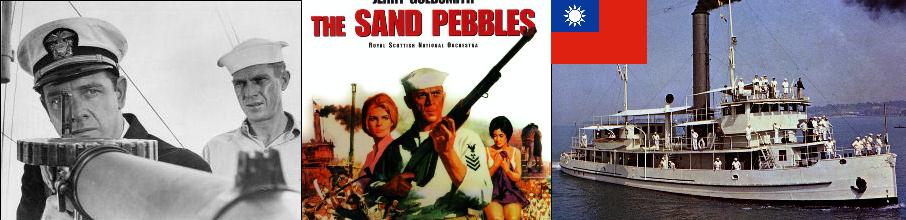
The Sand Pebbles

I watched the movie recently, called “The Sand Pebbles”, which takes place in China in the 1920s.  It’s based on the book of the same name.


 In the 19th century, the US, European countries, and Japan forced China to sign certain treaties which opened the country up to foreign trade and made citizens of those countries, so-called “treaty people”, immune to Chinese law.  The former element was at least partially a coercive deal to allow the British to trade opium to the Chinese for tea, a trade arrangement the Chinese had initially resisted and which resulted in opium addiction amongst the Chinese.  With regard to the latter element, westerners responded that Chinese law lacked due process and defendants were beheaded willy-nilly, so this immunity was not necessarily a bad thing.  Certain ports and cities in China were “treaty ports” with foreign “concessions”.  The Chinese resented this intrusion but were mostly powerless to stop it.  In 1900 the Boxer Rebellion was put down (the movie “55 Days in Peking” (1963), featuring Charlton Heston, David Niven, and Ava Gardner, describes that occasion).  The treaty powers continued to put warships and gunboats in Chinese waters.  In particular, the US Navy’s Yangtze River patrol featured gunboats, many of which had been taken over from the Spanish after the Spanish-American War, though they kept the original Spanish names (it's considered bad luck to rename a ship).  

 GunboatsThese were oversized barges with little in the way of armament (nowhere close to destroyers or cruisers) and very ugly, but they could get by in fairly shallow water.  Most were ancient relics, obsolete trash boats thrown to the river patrol and looked down on by the surface fleet.  An officer sent to a gunboat was in a career shithole.  The river patrol sailors were treated as, and considered themselves, rejects and misfits, by the rest of the Navy.  They often stayed on and shacked up with Chinese women after their service was over.

 Coolies.  The gunboats had an unofficial staff of Chinese “coolies” who did all the menial, unpleasant work (which on most Navy ships would have been done by the sailors themselves), allowing the sailors to live a more leisurely lifestyle.  They were paid in “squeeze” (unofficial kickbacks); they referred to their income from these tasks as their “rice bowl”.  Eventually “gearwheel” pressure forced the coolies off the ships and the sailors had to do their own dirty work.  Sailors are forbidden to marry Chinese; the government will not recognize the marriages and missionaries generally refused to perform ceremonies.  One sailor, Frenchy, wanted to marry his Chinese lover Maily but couldn’t find anyone to actually perform the ceremony.  Chinese have a strange status in the story – many favorable (Po-Han and Maily), many unfavorable (gearwheels – and Cho-Jen is very arrogant) and others fairly neutral.

 Missionaries.  Christians who lived in China and attempted – none too successfully – to convert Chinese to Christianity.  Though I know of many Chinese and Vietnamese Christians, they seem to be a very small minority.  The missionaries hated the gunboats and sailors:  to them, the sailors were immoral scoundrels, bad examples from Christian society which made the missionaries appear to be hypocrites, as most Western sailors were nominally Christian themselves.  The missionaries disagreed with the treaties and took the Chinese side; the gunboats were an embarrassment to them, even if they fled to these gunboats for safety whenever they felt threatened by hostile natives (how convenient, the treaty people would note).  The Navy didn’t particularly like the missionaries either – the gunboats had to protect these people who were rarely grateful and deliberately put themselves in harm’s way by overestimating the locals’ esteem for them.  Given their poor track record and the frequent abuse they suffered from the population they claimed loved them (treaty-favoring businessman to arrogant missionary: “we understand the Chinese don’t like us, but you don’t seem to realize that these people hate you almost as much as they hate us”), it seems the missionaries had an unreasonably favorable opinion of themselves and their status in China.

 Warlords.  At that time (1920s) China was run by different warlords who controlled parts of China.  The central government was fairly weak until Chiang Kai Shek attempted to unify the country and subjugate the warlords.  Warlord armies were lax in discipline and poorly equipped; they seldom fought well, and most disputes were resolved with money (“silver bullets”).   However, the gunboats seemed to get along far better with the warlords than the Nationalists.

 Gearwheel.  In the book, the Kuomintang (KMT)(Nationalists) are referred to as “gearwheel” by the US sailors, based  on the sun in the Nationalist flag which looks to them like a gear wheel.  The KMT stoke up resentment and violence against the gunboats.  Invariably, the gearwheel forces in the story are a bunch of hostile, lying assholes who end up causing problems for the San Pablo and its sailors – far more so than the warlords ever do.

 Bolsheviks.   They had recently won power in Russia and were attempting to expand their influence in China.  Here’s where it gets Byzantine:  Sun Yat-Sen and Chiang Kai-Shek were both courting Stalin’s favor and support, which Stalin did in fact grant, yet there was a growing Chinese Communist Party (CCP), for which Mao Zedong attempted to take control.  The KMT and CCP fought each other, but Stalin didn’t necessarily support the CCP over the KMT; Stalin was more worried about the Japanese and wanted the KMT and CCP to make a common front against the Japanese, whereas Mao wanted to use the Japanese to destroy the KMT. 
            As in Spain, Stalin was less concerned with the ideological purity of his minions and far more concerned about how consistent and reliable they were about following orders from Moscow; “Trotskyist” was the consistent label applied to undeniable Marxists/socialist/communists who defied Moscow’s orders even if they weren’t actually associated with Trotsky himself.  Thus Stalin was more apt to support Chiang Kai Shek if he was willing to do what he asked, whereas Mao tended to appear to him – correctly so – to be an undisciplined, loose cannon who was primarily looking out for his own interests, not even of his own party or country.

 Japanese.  Ironically, in The Sand Pebbles, the KMT work out to be bad guys and the Japanese – allied and among the treaty powers – turn out to be good guys.  This was just years before the invasion of Manchuria in 1931 and the rest of China in 1937.  In the book, the fleet sailors the Sand Pebbles encounter consider the Japs to be rivals, whereas the Sand Pebbles themselves consider the Japs to be friends. 

 Germans and White Russians.  In “55 Days in Peking” the Germans and Russians are among the treaty forces putting down the Boxer Rebellion.  The Germans had been stripped of their treaty privileges after WWI, though when the KMT started harassing, persecuting and killing treaty people in the late 20s, this meant the Germans were actually safer.  In the book, Holman strikes up a friendship with a German engineer, Scharf, who offers a refreshingly different point of view on many of the issues.
            White Russian refugees from the Russian Civil War were stateless “nonpersons” with no treaty rights, and considered by the US to be equal in status to Chinese.  In the book, one of the sailors, Lynch, marries a White Russian woman who uses his Liberty Bond money to buy a tea shop in Shanghai.  Because she’s a “nonperson” the other sailors tell him that as far as the Navy is concerned, he’s not really married.

 Book (1962).  After watching the movie I read the book on my Android Kindle.  It’s a very long book; in print it’s 600 pages.  Somewhat confusingly, the author’s name is Richard McKenna, not to be confused with actor Richard Crenna (see below).  The book features a fictional gunboat, the San Pablo, (a former Spanish ship – they kept the name) of which the crew members called themselves the Sand Pebbles.  The main character is the ship’s engineer, Holman (who the Chinese call “Ho-mang”); in addition to being the protagonist, he’s also one of the most sympathetic characters, easily the “hero” of the story.  Frenchy is a North Carolina sailor who falls in love with a Chinese woman named Maily.  The captain, Lt. Collins, has an impossible job of keeping morale when Coolidge and the missionaries constantly tie the Navy’s hands back in yet more of these inane “you can be shot at but not shoot back” missions the military always hates.  The missionaries are Miss Eckert, the leader Craddock, a teacher Gillespie, and promising Chinese student Cho-Jen.  Holman’s coolie sidekick is Po-Han.

            As is so often the case with books vs. movies, the book goes into considerably more detail of the background and has much more going on than can be effectively done in a movie lasting less than 10 hours.

 Movie (1966). The film itself was made by Richard Wise, the same director as “The Sound of Music”.  Steve McQueen played Holman; Richard Crenna played Lt. Collins; Candice Bergen, (Murphy Brown, and more recently Shirley Schmidt on Boston Legal) younger even than in “Carnal Knowledge”, played Miss Eckert.  The actress who played Maily, Marayat Andriane, went on to write the Emmanuelle books; Po-Han is played by a Japanese actor, Mako.  The movie lagged on for 3 hours, but it was fairly faithful to the book.

Thursday, April 8, 2010

Poland vs. Russia 1920


I had briefly – and incorrectly – touched upon this in my Russian Civil War blog.  Warsaw 1920: Lenin’s Failed Conquest of Europe, by Adam Zamoyski, set me straight.  In April 1920, Polish leader, General Pilsudski, decided to take advantage of the chaos in the Ukraine as a result of the civil war to invade, mostly to maximize the amount of territory Poland would keep once its borders were established.  They made it as far as – and captured – Kiev, before being thrown back into Poland

             Now it was the Poles’ turn to sweat, as the Reds invaded Poland and besieged Warsaw.  Whereas Pilsudski’s plans and scope were limited to Polish interests, Lenin took a wider view.  Poland was the gateway to Germany, which was stewing in its own post-war revolutionary chaos.  If the Reds could reach Germany, they could kickstart the German revolution and possibly engulf Western Europe in Bolshevism.

             But the Poles kept their cool, regrouped, and took advantage of bad planning and coordination between the Red commanders to strike back.  This threw the Reds back into the Ukraine, almost wiping out the armies they had sent in.  Certainly it was game over for Lenin’s plans to conquer Poland and Germany.  Lenin quickly signed peace terms with Pilsudski, which freed up his remaining forces from this debacle to handle his White enemies in the Ukraine.  For its part, Poland was left alone until 1939.  Pilsudski himself took power in Poland by a coup in 1926, and acted as dictator until his death in 1935.

Thursday, August 23, 2007

Three Red Movies


Despite my staunchly capitalist tendencies, I’m fascinated by the Soviets, Reds and Russians. I’ve read and seen “Enemy at the Gates” (the book/movie about the battle of Stalingrad, August 1942-January 1943) but somehow that wasn’t enough. Nor was the interminable “Dr Zhivago” with Omar Sharif and Obi-Wan Guinness, or the insomnia-curing “Reds” with Warren Beatty and Diane Keaton. I wanted MORE MORE MORE! Here are three more obscure ones...

The North Star. I don’t know where i saw pieces of this, but I decided to track it down. It’s on a Neflix DVD with two other movies. It’s a 1942 movie made by the glorious comrades in Hollywood (Stalin’s minions? No....!). The first half of the film shows happy, well-fed Russian peasants (the same type who were brutally murdered by Stalin ten years before) blissfully unaware that a Fascist menace is lurking at the borders. They sing so much I’m wondering if this is actually a musical. Finally June 22, 1941 rolls around, the music stops and the fun begins. The Germans take over their village, while the able-bodied men escape to the forest and become partisans. Eventually the well-equipped, clean-living, and expertly-led partisan group attacks the village and liberates it from the Germans. The Red Army itself is nowhere to be found, presumably retreating big time as Stalin traded space – of which the Soviets had a surplus – in exchange for time. A few people end up as casualties.
 What I find interesting is how clever this “propaganda” is, ostensibly for US audiences in 1942 to persuade them that the Soviets, who until Pearl Harbor were ideologically enemies of the US, suddenly became our friends due to the mutual antipathy for Nazi Germany. To be believable as propaganda, I suppose they couldn’t be TOO hard on the Germans. The Germans come off as very disciplined, very professional, very competent, and even some of the German doctors are “civilized” and not Nazis. The Germans are not complete animals. Interestingly, the Russian doctor chastises the “civilized” non-Nazi German doctor by telling him, “so long as you’re cooperating with your Nazi superiors and obeying their orders, don’t kid yourself that you’re any better than they are.”
 Since the movie was made in 1942, while the war was in full swing, I wondered how they expected to acquire authentic German uniforms and equipment. Sure enough, the helmets are all the WWI pattern steel helmets (1916-18) with oversized decals; the rifles look like Gewehr 98 (WWI) vs. Kar98k WWII models; the machine guns, rather than MG34 or MG42 are the WWI Schwarzlose models. Rather than the modern Wehrmacht of 1942, Russia has been invaded by the Reichwehr of 1934. The Stukas look authentic, as do a few MP40s. Somehow I doubt the Nazi government would have been too cooperative at assisting Hollywood at producing this “gee, aren’t the Russians swell?” movie.

Battleship Potemkin. This is the old 1925 silent movie. (Somehow my mind reads “Potemkin” to read “Pumpkin”, which gives a somewhat different feel to the story...the good ship Lollipop?) The Potemkin mutinied in 1905 (12 years before the Revolution). According to the story as told in the film: their main reason for overthrowing the officers was due to horrible meat (rancid with maggots) and inedible stew. The ship’s doctor claimed there was nothing wrong with either. The men protested that Russian POWs in Japan got better food – and knowing how ruthless the Japanese are, that says volumes about the Russian Navy. The captain ordered the marines onboard to shoot the unruly sailors, but they balked at that, and before long all hell broke loose. They threw the officers overboard, and the sailor who instigated the rebellion was shot by an officer. They brought his body ashore, labelled “shot for soup” ("no soup for you!") and a rebellion broke out in Odessa. Finally the Cossacks were summoned and shot the unarmed protesters on the steps, leading to the famous shot of the baby carriage tumbling down the steps.

Arsenal. No, not about the Premier League team from north London (well featured in the Colin Firth ORIGINAL of “Fever Pitch”, not that crap with Jimmy Fallon about the Red Sox). This is yet another B&W silent film from the early Soviet Union. It seems to focus on an arsenal (arms depot) which was disputed between two major armed groups: Ukrainian nationalists and Bolsheviks. Since it takes place during the Russian Civil War (1917-22) you can guess which side wins. The Ukrainians come off as the bad guys. Lots of Mosin-Nagant bolt-action rifles and Sokolov-mounted Maxim machine guns.
 I couldn’t really follow the plot (even with Russian/English subtitles) and the constant close-ups of various characters doing nothing at all got old very quick. Probably the most interesting part of the film was elements featuring Germans: both the end of the war (WWI) showing German soldiers in their late war steel helmets, essentially chasing hapless Russian soldiers back home from the front (note: unlike WWII, in WWI the Germans won the Eastern Front war): and a very touching segment where three soldiers – Russian, German, and French – each return home to their wives. The wives (Russian, German, and French) are clutching newborn babies, looking very guilty, and the soldier/husband – presumably away from home for far more than nine months – angrily demands CHTO? WER? QUI? Finally, there was a considerable amount of very unhappy looking people missing various limbs. War sucks – for everyone.

Thursday, July 5, 2007

American Revolution


July 4th again!  Last year I discussed the Grateful Dead.  This time I’ll discuss the American Revolution and other topics in a random fashion.

 When it comes to Cuba, for example, Che Guevara seems to get more credit than Fidel Castro.  At least with our own revolution, America gets it right.  George Washington, the man who led our forces to victory and by far the most important figure in our revolution, gets the top billing he deserves:  our capital city named after him, with an obelisk in his name; the state containing Seattle is named after him; two colleges; the $1 bill; the quarter; and lots more. 

 Viewed in perspective, the American Revolution is remarkable:
1.         A ragtag army managed to defeat, in conventional warfare, the redcoated armies of the world’s largest and most powerful country at the time Great Britain.  A colony defeating its mother country in battle?  Amazing. Granted, we had some help from France, but the French alone could not have done it, and would not have intervened had we not been a winning proposition.

2.         After finishing up the war, the Founding Fathers established a Constitution AND a stable democracy.  As history shows, it’s fairly easy to get rid of a dictator; imposing something close to order and stability afterwards is quite another story (we have some VERY recent history to show us that...).  Let’s compare two other major revolutions:

            A.         French Revolution (1789).  After some lip service to “liberty, equality, fraternity”, they set up a guillotine in what is now Place de la Concorde and began lopping off heads.  Not only the royal family (King Louis XVI and Marie Antoinette) but each other’s!  The Terror ended up devouring its own – Danton and Robespierre themselves became victims.  Eventually the French ended up with an emperor, Napoleon, and after some proud victories, with a comeback tour by Napoleon, they wound up with defeat; then Louis Phillippe and  Louis Napoleon (aka Napoleon III).  In other words, they had to wait until 1872 or so to finally get a stable republic.

            B.         Russian Revolution (1917).  The first one, led by Kerensky, only served to depose the Tsar but keep the war going on.  In November the Bolsheviks, led by Lenin, took over in St Petersburg; a civil war lasted until 1922; and from 1922 to 1989 the Russians had to endure under a totalitarian dictatorship, induding those particularly nasty years under Stalin.  Like the French, the Bolsheviks couldn’t resist brutally murdering not only the Romanovs but each other. 

 Celebrate July 4th?  Some argue that the blacks in this country have little reason to celebrate July 4th, because the American Revolution – and the establishment of democracy thereafter – did not immediately abolish slavery.  This sounds a little harsh.  Never mind that they had to construct an entire democratic government out of thin air, including a Constitution, a Bill of Rights, and set the whole thing up so it would (A) have enough power to do anything and protect itself from anarchy and tyranny, of the minority AND the majority; (B) not be so powerful that we’d wind up with a dictator; and (C) have an amendment system so it could be peacefully changed without a violent, bloody revolution.  Never mind t hat they had to sell this whole package deal to all 13 colonies and satisfy slaveowners down south as well as bankers in Philadelphia, New York and Boston.  Never mind that at that point, America was still an agricultural country which had yet to experience its own Industrial Revolution.  Never mind that even England had to wait until 1833 to abolish slavery.  Never mind that it took us a Civil War from 1861-65 to achieve this goal years later.  Slamming the Founding Fathers for not abolishing slavery in 1787 sounds about as logical as slamming Wilbur and Orville Wright for not launching a jet aircraft and breaking the sound barrier at Kitty Hawk, North Carolina, in 1903.

 American Wars.  I did some number crunching and came to a remarkable conclusion.   If you add up the days of prolonged hostilities (notwithstanding when a peace treaty formally ended the war) of each of the wars the US has been in, and divide the number of total deaths by that, we end up with not only some idea of how bloody these conflicts were, but you can also divide them into three categories of intensity of conflict:

A.  Low level.  The Revolutionary War (1775-81), War of 1812 (1812-1815), Gulf War (1990-91), and current Iraqi War (2003-2007): 2 deaths per day.

B.  Mid-level.  Mexican War (1846-48), Spanish-American War (1898), Korea (1950-53) and Vietnam (1965-72): a range from 20-33 deaths per day.

C.  High-level.  the big three: WWI (1917-18): 200/day; WWII (1941-45): 300/day; and the biggest by far, the Civil War (1861-65): 427/day.  Civil War casualties (well over 600,000) practically equal all the rest combined, with the next two being WWII (407,316) and WWI (116,708).  

            This should put it in perspective when the “body count” comes back from Iraq.  We aren’t even CLOSE to Vietnam – in total deaths OR intensity.  IF the situation can be stabilized and a strong, non-Islamic sickwad regime emerges, YES it will have been worthwhile.