Showing posts with label china. Show all posts

Friday, February 14, 2014

Shanghai 1937

More war!  More battle! And more China!   In particular, Shanghai 1937: Stalingrad on the Yangtze, by Peter Harmsen.   First off, it’s a good book in terms of identifying the parties involved, describing their backgrounds, and succinctly telling us what happened in terms of battles, units, casualties, etc.  Bravo.   I can recommend the book to anyone. 

However, I do have to take major issue with the author’s comparison with the battle of Stalingrad.

First, here’s what happened in Shanghai. In July 1937, the Japanese military presence in China was up in Manchuria, the northeastern part they really wanted.  Plus they were worried that Stalin would come down into Manchuria: 30 years after the Russo-Japanese War, and these two countries were still at it.  Anyhow.  The Chinese Generalissimo (Supreme Political and Military Leader) Chiang Kai Shek got the great idea to throw his best German-trained divisions into a street fighting meat grinder to take out the Japanese in downtown Shanghai.  In other words, a war of attrition in a city area which would hopefully destroy the Japanese presence in China.   This sounds more like the Germans’ plans for Verdun in World War I.
            Unfortunately for CKS, things didn’t work out as he planned.  The street fighting ate up his elite divisions like snow in July.  Fighting from heavily fortified positions, the Japanese were able to defend their urban sectors fairly easily.  Plus they had more aircraft, AND the Chinese Air Force was afraid of any anti-aircraft, so as soon as the flak went off, the Chinese pilots turned away and dropped their bombs nowhere close to the Japanese.   For their part, the Japanese also had several heavy cruisers on the river which provided artillery support to the Japanese forces in the city. 
            To make matters worse, the Chinese troops wasted fighting in downtown Shanghai were CKS’s elite, German trained forces, complete with M35 helmets, Mauser rifles, AND German advisors; miraculously, none of the advisors were killed in the battle. 
Second, the Japanese pulled some troops from Taiwan, some from Manchuria, some from home, landed them northeast and south of Shanghai, out in the countryside, sent them off to link up with each other, and proceeded to encircle Shanghai anyway.  Aside from one unit holding one building for propaganda purposes – which eventually ran into the International Settlement – the rest of the Chinese forces caught inside Shanghai had to run west to avoid being caught in the city. 
So the whole thing A) wiped out CKS’s best forces in street battles and B) essentially gave the Japanese Shanghai.   The most that could be said is that the Japanese did suffer heavy casualties in some specific engagements, but not enough to make a big difference. 

Let’s compare that with Stalingrad.   The Germans invaded Russia in June 1941.  They hoped to take Moscow by December, but were thrown back by elite Siberian units.  A temporary setback, but the Germans weren’t out of the equation yet.  In 1942 they resumed the offensive again.  By August, they reached Stalingrad, which is in southeast European Russia (west of the Urals) on the Volga river.  They bombed and shelled the city, and conquered all but the last sliver of territory on the west bank of the Volga.  Because of this, the Russians were able to resupply their forces on the west bank…from the east bank, although the Stukas tried to stop them.
            By November, the situation had changed.  Outside Stalingrad, the Red Army attacked the German flanks – mainly unhappy Italians and Romanians with no heavy weapons – and succeeded at surrounding the city.  The German pocket of the Sixth Army, containing roughly 250,000 men, was a large oval with Stalingrad proper on its eastern edge; the rest was open space.   Hitler forbade the Sixth Army from trying to break out.  Relief armies which tried to break the Soviet ring were smashed aside, and threatened with encirclement themselves.   Goering claimed the Luftwaffe could supply the Sixth Army by air, but couldn’t come close to getting the job done. 
            Finally, in February 1943, von Paulus, the commander of the Sixth Army, had to surrender.   Game over for the Sixth Army.   Oddly, even THAT didn’t end the Germans’ chances of winning the Eastern Front war.  It was a final battle in August 1943, Kursk – the largest tank battle in history – which finally blunted the Germans and forced them on the defensive.   But even then, it took until May 1945 – almost two years later – for the Nazis to fall.  Even in January 1945, the Red Army was still only in Poland. 

            So, how was Shanghai like Stalingrad?   The Japanese were the invaders.   Chiang Kai Shek allowed his men to escape the Japanese encirclement – with what forces were left, except for one division kept in one building as a symbolic gesture of resistance.  Moreover, Shanghai had a huge international settlement: the eyes of the world, through Western and American journalists, could observe the battle taking place blocks away.  Nothing like that occurred in Stalingrad, deep within a totalitarian dictatorship.  Street fighting + encirclement does not make a strong comparison.  Each battle needs to be viewed and considered on its own merits.  

Friday, January 13, 2012

Mao Tse-Tung

I recently finished reading a massive tome, Mao: The Unknown Story, by Jung Chang and Jon Halliday. I had actually received it for Christmas in 2010 and only completed it now.  Rather than go into detail about the Chinese leader, some of the book’s more pertinent facts and trends would make a decent summary.
 He was born in December 1893 and died in September 1976, of natural causes.  He married 4 times and cheated on all 4 wives.  The fourth was the infamous Jiang Qing, “Madame Mao” (above), who killed herself in 1991.
 He never brushed his teeth and didn’t bathe.  He denied medical treatment, operas, sex, culture, books, music, etc. to the people of China but fully indulged in all of these himself with no shame.  He had concrete, bomb-proof villas built for him to stay in across the country but rarely visited them in person.  Mao essentially wiped out Chinese culture but didn’t replace it with anything except a bland cult of personality devoted to himself. 
 The Long March was a hoax, as the Reds went wherever Chiang Kai Shek wanted them to go.  Mao’s success in the Civil War (1946-49) was mainly due to several Nationalist generals who were sleeper Reds and essentially delivered their armies to Mao on a silver platter.  George C. Marshall also deserves some blame for this, forcing Chiang to a cease fire which allowed the Reds to reorganize their Manchurian operations at a time when Chiang had been close to wiping them out.  While the book is obviously highly critical of Mao, it pulls no punches re: Chiang, explaining how poorly Chiang vetted his generals – keeping them in command long after their “incompetence” (really simply secret alliance to Mao) became obvious – and how he failed to rein in his corrupt brother-in-law, T.V. Soong.
 The dynamic between Stalin and Mao was especially interesting.  Stalin never trusted Mao, and Mao never liked Stalin.  They saw each other more as dangerous rivals than fellow travelers – they were never friends.  Even after WWII, Stalin insisted on keeping concessions in Manchuria which the Tsars had won decades earlier, e.g. Russians considered exempt from Chinese jurisdiction.  Stalin was also extremely stingy about releasing nuclear and military technology to Mao and only traded on terms extremely advantageous to the USSR, just like he sold tanks, planes and guns to the Spanish Republicans at full price. 
 The “Chinese volunteers” Mao sent to fight in Korea were mostly former Nationalist armies which Mao simply fed into the meat grinder to be slaughtered.  I recall so many “M*A*S*H” episodes where Hawkeye bitches and moans that the Korean War is going on forever, and he invariably blames MacArthur and the US brass, never mentioning the North Koreans or Mao.  The North Koreans wanted the war over – they knew it had been blown.  The US and its allies had no interest in continuing the slaughter.  Mao continued the war because he was angling to get concessions from Stalin, particularly nuclear weapons and military factories, essentially trading Chinese lives for technical know-how from the Soviets. 
 Likewise during the Vietnam War, Mao was willing to sell out the North Vietnamese if it meant getting favors from Nixon, since by that time the Russians had long stopped helping the Chinese.  The last thing Brezhnev wanted was to give Mao missiles he could use to nuke Moscow.  Having alienated Krushchev, then Brezhnev, Mao’s source of expertise dried up in the mid-60s.  The Chinese couldn’t build jets or helicopters that wouldn’t fall out of the sky.  Mao threw money at Third World countries (bought with Chinese lives starved to pay for the hard currency), who accepted the aid with a “big smile” but wouldn’t reciprocate with anything useful.  Albania was Mao’s lone ally and even Hoxha berated Mao for cozying up to Nixon. 
 I recall my high school history teacher laughing that “Let A Thousand Flowers Bloom”, a late 50’s campaign of openness (what Gorbachev would later call “glasnost”), resulted in an embarrassing explosion of gripes and complaints against the regime, but according to this book, Mao was well aware of his unpopularity and used the campaign as a way of luring his critics out into the open.
 Mao knew his Great Leap Forward in the early 60s was killing the Chinese peasants, but like Lenin before him, was indifferent to the millions of deaths by artificial famines.  The grain was shipped to Russia to pay for military factories, nuclear technology, and Mao was especially hoping for ICBM technology.  This much was evident for ages:  Mao was yet another dictator who did not care how many people died because of his policies and did whatever he wanted. 
 One son died in the Korean War, the other was mentally handicapped. With Kim Il Sung’s death in North Korea, it has been mentioned that “even Mao” did not favor hereditary succession, but he had no suitable male heirs to appoint anyway.  Even if he had, he probably wouldn’t have done so, out of paranoia that his son would probably dispatch him prematurely.  He told Deng Xiaoping, the man he guessed (correctly) would most likely succeed him, to consider open season on his wife.  What happened to China after his death was not his concern.
 In some ways Mao reminds me of George W. Bush and Warren Harding: politicians who had no genuine skills in any line of work or profession EXCEPT politics.   Mao was an indifferent student, never had a real job or legitimate skill, and his sole talent seemed to be getting himself into power and remaining there.  He was ruthless about sacrificing others to his ambitions: whether it was Red armies commanded by his political rivals thrown to Chiang in the 30s; Nationalists forced to fight the Japanese, with no help from existing Red armies, because Mao wanted Chiang to wipe himself out fighting the invaders; and during the Cultural Revolution, dozens of cadres sacrificed and disgraced, tortured, imprisoned, and executed, either because they had opposed his famine-inducing policies of prior years or simply because he considered them dangerous rivals.  Outwitting political opponents, all this “sausage-making” and behind-the-scenes intrigue, back-stabbing, manipulation, etc. were what Mao knew best, really the only thing he knew how to do.  None of this was motivated by any genuine affection for China or its people – for anyone except himself.       

Friday, September 2, 2011

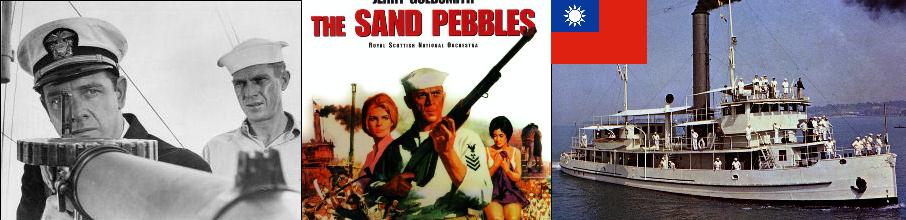
The Sand Pebbles

I watched the movie recently, called “The Sand Pebbles”, which takes place in China in the 1920s.  It’s based on the book of the same name.


 In the 19th century, the US, European countries, and Japan forced China to sign certain treaties which opened the country up to foreign trade and made citizens of those countries, so-called “treaty people”, immune to Chinese law.  The former element was at least partially a coercive deal to allow the British to trade opium to the Chinese for tea, a trade arrangement the Chinese had initially resisted and which resulted in opium addiction amongst the Chinese.  With regard to the latter element, westerners responded that Chinese law lacked due process and defendants were beheaded willy-nilly, so this immunity was not necessarily a bad thing.  Certain ports and cities in China were “treaty ports” with foreign “concessions”.  The Chinese resented this intrusion but were mostly powerless to stop it.  In 1900 the Boxer Rebellion was put down (the movie “55 Days in Peking” (1963), featuring Charlton Heston, David Niven, and Ava Gardner, describes that occasion).  The treaty powers continued to put warships and gunboats in Chinese waters.  In particular, the US Navy’s Yangtze River patrol featured gunboats, many of which had been taken over from the Spanish after the Spanish-American War, though they kept the original Spanish names (it's considered bad luck to rename a ship).  

 Gunboats.  These were oversized barges with little in the way of armament (nowhere close to destroyers or cruisers) and very ugly, but they could get by in fairly shallow water.  Most were ancient relics, obsolete trash boats thrown to the river patrol and looked down on by the surface fleet.  An officer sent to a gunboat was in a career shithole.  The river patrol sailors were treated as, and considered themselves, rejects and misfits, by the rest of the Navy.  They often stayed on and shacked up with Chinese women after their service was over.

 Coolies.  The gunboats had an unofficial staff of Chinese “coolies” who did all the menial, unpleasant work (which on most Navy ships would have been done by the sailors themselves), allowing the sailors to live a more leisurely lifestyle.  They were paid in “squeeze” (unofficial kickbacks); they referred to their income from these tasks as their “rice bowl”.  Eventually “gearwheel” pressure forced the coolies off the ships and the sailors had to do their own dirty work.  Sailors are forbidden to marry Chinese; the government will not recognize the marriages and missionaries generally refused to perform ceremonies.  One sailor, Frenchy, wanted to marry his Chinese lover Maily but couldn’t find anyone to actually perform the ceremony.  Chinese have a strange status in the story – many favorable (Po-Han and Maily), many unfavorable (gearwheels – and Cho-Jen is very arrogant) and others fairly neutral.

 Missionaries.  Christians who lived in China and attempted – none too successfully – to convert Chinese to Christianity.  Though I know of many Chinese and Vietnamese Christians, they seem to be a very small minority.  The missionaries hated the gunboats and sailors:  to them, the sailors were immoral scoundrels, bad examples from Christian society which made the missionaries appear to be hypocrites, as most Western sailors were nominally Christian themselves.  The missionaries disagreed with the treaties and took the Chinese side; the gunboats were an embarrassment to them, even if they fled to these gunboats for safety whenever they felt threatened by hostile natives (how convenient, the treaty people would note).  The Navy didn’t particularly like the missionaries either – the gunboats had to protect these people who were rarely grateful and deliberately put themselves in harm’s way by overestimating the locals’ esteem for them.  Given their poor track record and the frequent abuse they suffered from the population they claimed loved them (treaty-favoring businessman to arrogant missionary: “we understand the Chinese don’t like us, but you don’t seem to realize that these people hate you almost as much as they hate us”), it seems the missionaries had an unreasonably favorable opinion of themselves and their status in China.

 Warlords.  At that time (1920s) China was run by different warlords who controlled parts of China.  The central government was fairly weak until Chiang Kai Shek attempted to unify the country and subjugate the warlords.  Warlord armies were lax in discipline and poorly equipped; they seldom fought well, and most disputes were resolved with money (“silver bullets”).   However, the gunboats seemed to get along far better with the warlords than the Nationalists.

 Gearwheel.  In the book, the Kuomintang (KMT)(Nationalists) are referred to as “gearwheel” by the US sailors, based  on the sun in the Nationalist flag which looks to them like a gear wheel.  The KMT stoke up resentment and violence against the gunboats.  Invariably, the gearwheel forces in the story are a bunch of hostile, lying assholes who end up causing problems for the San Pablo and its sailors – far more so than the warlords ever do.

 Bolsheviks.   They had recently won power in Russia and were attempting to expand their influence in China.  Here’s where it gets Byzantine:  Sun Yat-Sen and Chiang Kai-Shek were both courting Stalin’s favor and support, which Stalin did in fact grant, yet there was a growing Chinese Communist Party (CCP), for which Mao Zedong attempted to take control.  The KMT and CCP fought each other, but Stalin didn’t necessarily support the CCP over the KMT; Stalin was more worried about the Japanese and wanted the KMT and CCP to make a common front against the Japanese, whereas Mao wanted to use the Japanese to destroy the KMT. 
            As in Spain, Stalin was less concerned with the ideological purity of his minions and far more concerned about how consistent and reliable they were about following orders from Moscow; “Trotskyist” was the consistent label applied to undeniable Marxists/socialist/communists who defied Moscow’s orders even if they weren’t actually associated with Trotsky himself.  Thus Stalin was more apt to support Chiang Kai Shek if he was willing to do what he asked, whereas Mao tended to appear to him – correctly so – to be an undisciplined, loose cannon who was primarily looking out for his own interests, not even of his own party or country.

 Japanese.  Ironically, in The Sand Pebbles, the KMT work out to be bad guys and the Japanese – allied and among the treaty powers – turn out to be good guys.  This was just years before the invasion of Manchuria in 1931 and the rest of China in 1937.  In the book, the fleet sailors the Sand Pebbles encounter consider the Japs to be rivals, whereas the Sand Pebbles themselves consider the Japs to be friends. 

 Germans and White Russians.  In “55 Days in Peking” the Germans and Russians are among the treaty forces putting down the Boxer Rebellion.  The Germans had been stripped of their treaty privileges after WWI, though when the KMT started harassing, persecuting and killing treaty people in the late 20s, this meant the Germans were actually safer.  In the book, Holman strikes up a friendship with a German engineer, Scharf, who offers a refreshingly different point of view on many of the issues.
            White Russian refugees from the Russian Civil War were stateless “nonpersons” with no treaty rights, and considered by the US to be equal in status to Chinese.  In the book, one of the sailors, Lynch, marries a White Russian woman who uses his Liberty Bond money to buy a tea shop in Shanghai.  Because she’s a “nonperson” the other sailors tell him that as far as the Navy is concerned, he’s not really married.

 Book (1962).  After watching the movie I read the book on my Android Kindle.  It’s a very long book; in print it’s 600 pages.  Somewhat confusingly, the author’s name is Richard McKenna, not to be confused with actor Richard Crenna (see below).  The book features a fictional gunboat, the San Pablo, (a former Spanish ship – they kept the name) of which the crew members called themselves the Sand Pebbles.  The main character is the ship’s engineer, Holman (who the Chinese call “Ho-mang”); in addition to being the protagonist, he’s also one of the most sympathetic characters, easily the “hero” of the story.  Frenchy is a North Carolina sailor who falls in love with a Chinese woman named Maily.  The captain, Lt. Collins, has an impossible job of keeping morale when Coolidge and the missionaries constantly tie the Navy’s hands back in yet more of these inane “you can be shot at but not shoot back” missions the military always hates.  The missionaries are Miss Eckert, the leader Craddock, a teacher Gillespie, and promising Chinese student Cho-Jen.  Holman’s coolie sidekick is Po-Han.

            As is so often the case with books vs. movies, the book goes into considerably more detail of the background and has much more going on than can be effectively done in a movie lasting less than 10 hours.

 Movie (1966). The film itself was made by Richard Wise, the same director as “The Sound of Music”.  Steve McQueen played Holman; Richard Crenna played Lt. Collins; Candice Bergen, (Murphy Brown, and more recently Shirley Schmidt on Boston Legal) younger even than in “Carnal Knowledge”, played Miss Eckert.  The actress who played Maily, Marayat Andriane, went on to write the Emmanuelle books; Po-Han is played by a Japanese actor, Mako.  The movie lagged on for 3 hours, but it was fairly faithful to the book.