Friday, October 14, 2011

Vulcan's Hammer vs. Occupy Wall Street


Vulcan’s Hammer, Phillip K. Dick (Kindle) (written in 1960).  The year is 2029 (!) and Earth is ruled by a supercomputer called Vulcan 3.  An anti-computer movement, led by anarchic, monk-like Healers, rises against the computer.  The human head of this so-called Unity government, Jason Dill, seeks advice not only from Vulcan 3, but its predecessor, the obsolete and de-authorized but still fully functional Vulcan 2.  Vulcan 2 warns that Vulcan 3 will develop self-awareness and begin to act on its own behalf and initiative.  For that reason, Dill withholds information about the Healer movement from Vulcan 3, but Vulcan 3 finds out anyway.  A sympathetic sub-director, Barris, is the main protagonist of the story:  he opposes Vulcan 3, but initially cannot bring himself to switch sides to the Healers.  Ultimately, however, he determines that Vulcan 3 has access to thermonuclear weapons and will not hesitate to wipe out the entire human race if it deems it necessary to protect its own interests, so Barris decides that, as anarchic and “we don’t stand for anything except tearing down the system” as the Healers may be, they are less of a threat to humanity than Vulcan 3.  Moreover, the Unity forces upon which Barris could count on to oppose BOTH Vulcan 3 AND the Healer movement are nonexistent; so he allies himself with the Healers.  

            The plot of this story is so much like “Terminator” (even down to the year 2029) that I couldn’t imagine Cameron was oblivious to this story.  But Wikipedia says this:
 In Rome, during the release of Piranha II: The Spawning director James Cameron grew ill and had a dream about a metallic torso dragging itself from an explosion while holding kitchen knives.[2] When Cameron returned to Pomona, California he stayed at Randall Frakes' home where he wrote a draft for The Terminator. Cameron later stated that his influences while writing the script were 1950s science fiction films, episodes of The Outer Limits as well as contemporary films including The Driver and The Road Warrior.
...Writer Harlan Ellison stated that he "loved the movie, was just blown away by it", but believed that the screenplay was based on an episode of The Outer Limits he had written, titled "Soldier". Orion gave Ellison an undisclosed amount of money and an acknowledgment credit in later prints of the film. Some accounts of the settlement state that "Demon with a Glass Hand", another Outer Limits episode written by Ellison, was also claimed to have been plagiarized by the film, but Ellison has explicitly stated that The Terminator "was a ripoff" of "Soldier" rather than "Demon with a Glass Hand".
As you can see – NO mention of Dick in this whole thing.  He had died in 1982, only shortly before the movie came out, but the story dates from 1960.  It seems his estate was asleep at the switch.   Here, by the way, is the plot to “Soldier” (also from the Wikipedia entry for this particular Outer Limits episode):
Eighteen hundred years in the future, two foot soldiers clash on a battlefield. A random energy weapon strikes both and they are hurled into a time vortex. While one soldier is trapped in the matrix of time, the other, Qarlo Clobregnny, materializes on a city street in the year 1964.
Qarlo is soon captured and interrogated by Tom Kagan, a philologist, and his origin is discovered. Qarlo has been trained for one purpose, fighting, and that is all he knows. Progress is made in "taming" him; eventually Qarlo comes to live with the Kagan family.
But the time eddy holding the enemy soldier slowly weakens. Finally he materializes fully and tracks Qarlo to the Kagan home. In a final hand-to-hand battle, Qarlo sacrifices his life to kill the enemy and save the Kagan family.
In a limited sense, the “time traveling opponents seek each other out” element of the plot is evident in “The Terminator”.  But Cameron’s overall scenario, of Skynet developing self-awareness and destroying the human population to protect itself, is almost verbatim from Dick’s story. 
The Healer movement described in this book is very similar to the “Occupy Wall Street” movement.  As I’ve noted several times in the past, the anti-World Bank/IMF group is extremely vocal in its opposition to capitalism and Wall Street, but is equally silent about its actual goals and objectives, besides simply trying to shut down the system or embarrass as many people as possible.  Among others, the Anonymous movement has been described as “anarchist”.  However, it seems that Adbusters was the primary organization to instigate these protests and Anonymous has simply encouraged its own supporters to join in.

Actually, identifying the Occupy Wall Street movement with the Healers in Vulcan’s Hammer gives the OWS too much credit: the Healers opposed what was clearly a totalitarian dictatorship run by an all-powerful machine, Vulcan 3. OWS appear to be, at best, yet another vaguely articulated attack on capitalism per se by a movement which NEVER explains what type of system it favors.  Are you socialist?  Are you anarchist?  If you oppose capitalism, what do you support?

One thing that Wall Street does not do that Qaddaffi, Syria, and other regimes do:  use armed force to attack protesters.  Where are the Morgan Stanley Armored Divisions?  The Goldman Sachs F-16s spraying Merrill Lynch Napalm on the crowds?  The GM & Ford Riot Police?  Even the Pinkerton strikebusting goons are history, quite literally.  Not even US armed forces, or the National Guard, as “proxies” for their corporate puppetmasters, are present.  In DC, the Mall has always been a place for protest marches, and the DC police only arrest people for not having permits or blocking traffic.  No tear gas, no massed ranks of riot police, no Cossacks with sabers chasing unarmed protesters and their baby carriages down the steps of Odessa.

Whatever else it might be, the US government and Wall Street are not totalitarian regimes – and never have been.  North Korea, Red China, and Cuba still are.  I’ve seen some pictures showing “V For Vendetta” imagery among the protesters.  Neither George W. Bush nor Barack Obama – nor any other US President, even the much-maligned Richard Nixon – are or were anywhere close to Adolf Hitler, nor any US regime remotely close to the UK dictatorship depicted in “V For Vendetta”, Orwell’s 1984, or Nazi Germany.  Even Franklin Roosevelt, who co-opted the socialists’ agenda and enacted much of what could be found in the Nazi Party’s 25 Points platform of 1920, did not turn the FBI loose as an American Gestapo, and the very worse excesses of his administration, the Japanese internment camps in California, were just that: internment camps and not Auschwitz, Belzec, Treblinka, Sobibor, or even Dachau or Theriesenstadt.  This plague of “moral relativism” and “moral equivalence” is ubiquitous among the protesters.  By making these bizarre and obviously inapplicable parallels, they completely lose any moral credibility or political coherence they might possibly have.  Lyndon LaRouche makes as much sense as they do.

Here’s your challenge, latter-day Marxists and anarchists:  take what we’ve learned from (1) the Paris Commune, (2) Soviet Russia, (3) Red China, (4) North Korea, (5) “Market Socialist” Europe (Sweden, Denmark, etc.), and (6) the capitalist First World, and give us a coherent, sensible blueprint for a fair and free modern day society: its government (if any) and its economic system.  Tell us how that would work not merely in Belgium, Sweden, or Canada, but also in larger countries like the US and Russia with diverse, multi-ethnic populations and huge, complex modern economies.  When you’ve got that all figured out, THEN you can tear down the current system once you’ve figured out what the hell you’re going to replace it with.

And as for freedom of expression, listen up:  you have a right to say what you want.  You have a right to wave placards.  You have a right to get up on a stage and bark and bray.  And you can invite as many of your comrades as you can get to join you at the same time.  But here’s where your rights end:
1.         No right to block traffic – e.g. roads and bridges - simply to inconvenience others you feel are complacent or indifferent to your political agenda;
2.         No right to obstruct pedestrian traffic to museums and other tourist attractions, again as some misguided attempt to disrupt others’ lives because you feel they don’t care enough about your movement;
3.         No right to blow things up, even if you target unoccupied office buildings at 2 a.m. with a warning call, simply to attract attention to your cause (“propaganda by deed”) and stir the general public out of its bourgeois complacency.  This applies whether your goal was to stop the war in Vietnam (The Weather Underground), the wars in Afghanistan or Iraq, or Wall Street. 

Friday, October 7, 2011

Black Sabbath Revisited

A few weeks ago my brother uttered the blasphemy of blasphemies, heresy of heresies: that the albums Heaven And Hell and The Mob Rules were superior not only to Technical Ecstasy or Never Say Die, but ANY album Black Sabbath released with Ozzy Osbourne on vocals.  Much as I acknowledge the high quality of those two Ronnie James Dio albums, and recognize the relatively (!) low quality of the last two albums with Ozzy Osbourne, I cannot agree with this bold assertion.  But it does make an album-by-album analysis appropriate at this…juncture.

 Black Sabbath.  The debut album was released on Friday, February 13, 1970 in the UK, June 30, 1970 in the US.  The “popular” songs are “Black Sabbath”, “The Wizard”, and “N.I.B.”  European versions of the album featured “Evil Woman” instead of “Wicked World”, though I prefer the latter song.  The lengthy “Warning” was a track I learned to play along to by ear in college, on a recently purchased Gibson SG, without following any tablature; this is the “underrated gem” on the album, but “Behind the Wall of Sleep” also applies.  I bought this one on vinyl along with Paranoid, copied both to a 90 minute tape, and listened to them on the train ride up to The Hague for Model United Nations in high school (January 1985).  The Deluxe Edition features an alternate take of “The Warning”.

Paranoid.  Released September 18, 1970 in the UK, January 7, 1971 in the US. The second album is often considered the best, though I feel that SBS (below) deserves that distinction.  The “popular” songs are “War Pigs”, “Paranoid”, “Iron Man” and “Fairies Wear Boots”; the hidden gems are the balance: “Planet Caravan”, “Electric Funeral”, “Hand of Doom”, and “Rat Salad”.  A typical Sabbath set would open with “War Pigs”, close with “Paranoid” as the encore, and feature “Iron Man” somewhere in between, so clearly this album is crucial to a Sabbath collection.  The Deluxe Edition features a DVD-Video version of the complete album in 5.1 Surround (quad).

Master of Reality.  Released July 21, 1971.  I got this on cassette from the PX at Henderson Hall, the Marine Corps base next to Arlington Cemetery in northern Virginia, in summer 1984.  The other choice was Sabotage.  Since this album had two tracks from Speak of the Devil, “Sweet Leaf” and “Children of the Grave”, whereas Sabotage only had one, “Symptom of the Universe”, this one made the cut.  The album name provided the source for Chris Goss’ band name – Goss is known as a stoner rock idol, and closely associated with Josh Homme and Queens of the Stone Age.  The popular songs on this album are as noted above; the hidden gems are really the balance:  “After Forever” (a pro-religion song the fundies seem to ignore or just be completely unaware of), “Lord of this World”, “Solitude” – another haunting slow song – and “Into The Void”, covered by Soundgarden with completely different lyrics.  “Solitude” alone makes this a “Ok, now I want to kill myself” album.  Shouldn’t every Sabbath album qualify as such?

Vol. 4.  Released September 25, 1972.  I seem to recall buying this on vinyl along with Master of Reality, though for the latter it was simply rounding out the collection as I already had it on tape, whereas with this album I hadn’t heard it at all.  The popular song is “Snowblind”, and the hidden gems are “Wheels of Confusion” (only played live at the Hollywood Bowl – ten days before the album was released!), “Changes” (later done by Ozzy’s solo band), “Laguna Sunrise” (yet another slow instrumental, which seems to evoke images of a lazy Florida hotel in the early 60s), and “St. Vitus Dance”. 

Sabbath, Bloody Sabbath.  Released November 1973.  I bought this on vinyl along with Sabotage.  Others may disagree with me, but I think this is their peak.  Oddly, only the title track seems to survive as a hit, although Metallica were shrewd enough to cover “Sabbra Cadabra”.  “Fluff” is one of their best instrumentals.  “National Acrobat”, “Spiral Architect”, and “Killing Yourself to Live” are all excellent, and even the two weakest tracks, “Who Are You” (with Rick Wakeman on keyboards) and “Looking For Today” are still very good.  Not a bad track on the whole album – and certainly at least as good, if not much better (IMHO), as/than H&H and Mob Rules.  And the album artwork, both front and back cover, is one of the best in rock.  Unlike LZ IV, this is one of these albums where the artwork matches the quality of the album.

Sabotage.  Released July 28, 1975.  Inevitably, it was impossible to top SBS, but Sabotage suffers in comparison but not absolute terms – as well as having not merely a less impressive cover, but one which seems fairly thrown together (even with all their money, Sabbath still dressed like bums).  “Symptom Of The Universe” is the best known, but here it has a very nice acoustic 2nd half which only resurfaced live with the Tony Martin era Cross Purposes tour set.  “Megalomania” is live on Past Lives; so far as I know, neither “Thrill of it All” – one of their best songs, ever, and easily the equal of anything on a Dio album by ANY band – or “The Writ” were ever played live.  “Hole in the Sky” was covered by Pantera.  The weakest track is “Am I Going Insane (Radio)”, but with so many strong tracks on the album, it can’t sink the album as a whole.

 Technical Ecstasy.  Released September 25, 1976. I bought this on vinyl along with Never Say Die.  Hipgnosis, best known for Pink Floyd covers (e.g. Dark Side of the Moon), struck out on this album; two robots passing each other on escalators, one apparently male, the other female.  It may be for this reason alone that this album gets such a bad rap; on Joe Siegler’s Black Sabbath website, there is a link to an article by Dan Marsicano on why this album is underrated; I agree that it is.  “Dirty Women” was brought back into the set for Ozzy’s return to Sabbath (1997-2001).  But the good songs are damn good: “You Won’t Change Me”, “All Moving Parts Stand Still”, and even “It’s Alright”, Bill Ward’s sole singing job on a Sabbath album, covered by Guns N’Roses.  For me, “Gypsy”, “Back Street Kids” and “Rock’n’Roll Doctor” (trying to be Blue Oyster Cult, as Marsicano described it) are indeed subpar, though no worse than simply mediocre.  “She’s Gone” is another sad and depressing song which was Sabbath’s particular forte. 

 Never Say Die.  Released September 28, 1978 (US), October 1, 1978 (UK).  I agree that this album deserves its bad reputation.  About the only songs I like on here are “Air Dance” (very similar to Frank Zappa – no wonder he was accompanying the band on their final tour with Ozzy, on which Van Halen was the opening act) and “Junior’s Eyes”.  I really can’t stand “Johnny Blade”, and the rest of the album is mediocre. 

 Live At Last.  Released summer of 1980.  An honorable mention for this live album, released well after Ozzy left the band but recorded on the Vol 4 tour (March 1973) – and includes “Killing Yourself To Live” (from the as-yet unreleased Sabbath, Bloody, Sabbath) with alternate lyrics.  The extended version of “Wicked World” is awesome: an unusually jazzy improv by Tony Iommi, snippets of “Supernaut”, and a heavy version of “Changes”.  Now this is included on Past Lives.  

 Vinyl.  We bought all the Sabbath albums on vinyl, up to and including Seventh Star.  Eternal Idol was the first album which came out when we were no longer buying records.  I bought We Sold Our Souls For Rock’N’Roll on vinyl in Paris, but never bothered to buy the CD version of it.  Of course, our vinyl versions, which were NEMS reissues from the 80s and not first generation Warner Brothers releases, did not have gatefold sleeves (except for Vol. 4, and that one was missing Ozzy and Bill), much less the posters.

 Remasters.  The first set was from Castle; they have lyrics and liner notes.  I can’t say I’ve noticed a HUGE difference between these and the original CD releases.  I haven’t heard the Rhino remasters; nor can I say I can trust Joel Siegler’s testimony that the Rhino versions are much better than the Castle series (which I have), as he has essentially become Sabbath’s webmaster and cannot risk alienating them by describing the newer ones in anything less than glowing terms.   For that matter, I really dislike the Amazon.com “user reviews” which try to tell me why these albums are so important – I know they are, I bought them ages ago, on vinyl, no less! – but fail to address the issue of whether the 3rd generation remaster is any better than the previous two.  I do have a few of the Deluxe Editions, which claim the standard album is also digitally remastered.  At least with Judas Priest someone with no connection with the band took the trouble to listen to the various remastered versions of Rocka Rolla and Sad Wings of Destiny to give us an opinion as to which one he thought sounded best.  I’ve yet to see anything comparable for Black Sabbath.

 Bootlegs.  I have, on tape, several bootlegs: the Paris 1970 show (“War Pigs” as “Walpurgis Night”, with alternate lyrics), a Sabotage tour show with “Sabbra Cadabra”, the Reading 1984 Born Again show (includes “Smoke on the Water” in the encore), a Seventh Star tour bootleg with Ray Gillen on vocals (Hammersmith Odeon) (on CD), and the Rob Halford/Ozzy Osbourne show from 1992.

 For that matter, I might as well review the Dio albums.

 Heaven & Hell.  Just like Back In Black – by my other favorite band, AC/DC – Sabbath hit the ground running with their first album with Ronnie James Dio.  The title track, “Neon Knights”, “Children of the Sea”, and “Lonely is the Word” are all excellent.  “Die Young” and “Walk Away” are good, though I could do without “Lady Evil”.  And the artwork is killer.   But again, I still put Sabbath, Bloody Sabbath ahead of this album.

 The Mob Rules.  UGH.  I can’t stand the artwork, and unlike the prior album I also can’t stand the title track.  “Country Girl”, “Voodoo”, “The Sign of The Southern Cross”, are all quality, as are the lesser tracks.  Perhaps I’m biased by the terrible artwork.

 Live Evil.  The double live album with Dio, recorded in Seattle on the Mob Rules tour.  The mix of H&H, Mob Rules, and classic Ozzy tuneage is good, as is the sound quality.  Of course, the highlight is Dio’s pedantic instructions to an obviously English-speaking audience of Americans on the “Heaven & Hell” sing-along portion, i.e. “here’s the example.”  For all his skill as a singer, his crowd-control skills lagged well behind…Ian Anderson…Eric Bloom…Jim Morrison…Rob Halford…Bruce Dickinson…even Ozzy Osbourne and Ian Gillan, though I still put him a bit further ahead from Tony Martin.

Dehumanizer.  My friend Ken salivated over the imminent release of the album, and the tour for this album in 1992 was my first opportunity to see Black Sabbath in concert; the Seventh Star tour was cancelled before it reached Paris in 1986. 
            I really didn’t like this album.  Sorry, but I do NOT worship Ronnie James Dio – either in Elf, Rainbow, Sabbath or solo.  To me, every single track on this album is mediocre.  Tony and Dio clearly developed a “system” for writing songs which put them on auto-pilot.  If you like the formula, fine, but if you don’t it’s just another album of writing by the numbers.

 The Devil You Know.  The same deal with this album.  The “X of the Y” is the pattern for ¾ of the album.  Aside from “Fear”, “Bible Black”, and “Nevermore”, all the rest of the songs feature that type of song title and chorus.  This might as well be “Dehumanizer II” – great if you loved that album, otherwise so-so.

 Ozzy vs. Dio.  I had always assumed that Ozzy wrote the lyrics back when he was in the band.  Only much later did I read that Geezer was the principal lyricist for the band until Dio showed up and took over completely.  For some reason I never really liked Dio’s lyrics compared to Geezer’s, but until now I hadn’t been able to focus my thoughts on the issue sharply enough to articulate why.  If there is some subtle, barely articulable difference, it’s that Dio strikes me as pretentious, whereas Geezer and Ozzy are not.  Pretentious works for the Moody Blues, King Crimson, Jethro Tull, Pink Floyd – the usual crop of “progressive” bands – but does not work so well for a blues-based hard rock band like Black Sabbath.  In the latter context we wind up with the spectacle of the black trenchcoated, “food court druids” waxing poetic about the occult.  I know we want to steer light years away from the Beavis & Butt-head, “Heavy Metal Parking Lot” crowd of idiots who unfortunately make up a sizable portion of the heavy metal audience, but this goes too far.  Plenty of us are neither pretentious nor idiots. 
 One last piece of anti-Dio heresy: I do like Born Again, even if Ian Gillan can’t stand it and no other Sabbath fan seems to be willing to admit it. 


Friday, September 30, 2011

Psychedelisch

When we think of Germans, we think of highly organized, efficient, crew cut people who follow orders and obey authority.  Since WWII, however, such ideas have fallen into disfavor, especially in Germany.  The Nazi Party and the swastika are banned.  Even the Swiss chemist himself, Albert Hoffman, invented LSD.  In the 1960s, the world peace, aka hippie, movement found as much fertile soil in West Germany as anywhere else; the West Germans even produced their own left wing extremist groups, the Red Army Faction and the Baader-Meinhof gang. 

 Recently I came across a pair of newer German psychedelic bands, Electric Moon and Vibravoid.  Both go off into the ozone with 20-30 minute songs with no lyrics (similar to Sleep’s Dopesmoker album, a single 60 minute instrumental track).  For each band I have a studio album and a live album, Lunatics and Live at Epplehaus (Electric Moon; the latter is two discs each with only one humungous song on it), and Minddrugs and Herzberg Festival for Vibravoid.  I’ve yet to see either band tour outside Germany, though – just as Hawkwind never seems to leave the UK anymore.

 But Germans have been doing this for some time:  Can and Amon Düül II were at it in the late 60s and early 70s, and are as crazy and off the wall as the Grateful Dead, Hawkwind, Pink Floyd, or Gong.  There’s not much more I can say about any of these bands besides recommending them to anyone who loves the tried and true psychedelic bands we’ve known about for years. 

 Piper Angle.  Pink Floyd is rightfully labeled a psychedelic band, and its first album, with Syd Barrett, Piper at the Gates of Dawn, is Exhibit A for that case.  But I’ve found that Piper has two very different types of songs: the heavy duty, mindf**k psychedelic songs, of which “Astronomy Domine” and “Interstellar Overdrive”  are the most obvious; and the simpler, whimsical, sing-song, nursery rhyme songs, almost children’s songs, of which “Bike”, “The Gnome”, “Scarecrow” and “Chapter 24” are the best examples.  These German bands are all in the first category and have no songs which pay homage to Syd in the second fashion.

Thursday, September 22, 2011

Arthur v Arthur

A few months ago I saw the recent “Arthur” remake in the movie theater – the one with Russell Brand as the title character.  Only recently was I able to watch the original, with Dudley Moore, on DVD – it was heavily backlogged on Netflix.  I’m not the only one who seems to do this.  So in any case, a comparison between the two is appropriate.

 Story.  Arthur is a 30-something playboy with absolutely no responsibility.  His family has finally lost patience with him and insists that he marry a rich girl from another wealthy family, or they will cut off his inheritance – all $75 million.   With no job skills or clue how to look after himself, this should act as an incentive for him to get with the program.  But Arthur finds a simple girl he likes much more than his intended fiancé, and threatens to marry her instead.  The rest of the film is simply the resolution of this…issue.

 Original.  Dudley Moore played Arthur.  I never liked his “I’m sloshed!!  I’m in NY! I have an English accent and I don’t know why!” shtick.  Of course, this was the whole point, but he barely got likeable by the end of the film.  John Gielgud played his butler, Hobson (“shall I wipe your butt for you?” he asks out of earshot); Jill Eikenberry plays his intended (not very attractive at all); and Liza Minelli, always with a spectacularly unflattering short haircut, was actually fairly pretty and likeable as the rogue-ish simple girl (father played by Morty Seinfeld actor) who wins Arthur’s heart.   

 Remake.  This time around it’s Russell Brand as Arthur, Hobson has ovaries instead of testicles (Helen Mirren), the intended bride is MUCH hotter (Jennifer Garner – actually not that bad here), and the Liza replacement is fairly dull and oddball Greta Gerwig, snatching a role which should have gone to Zooey Deschanel.  She’s actually quite dull compared to Garner, whereas Minelli had easily topped Eikenberry.

 Between the two, I MUCH preferred Russell Brand.  He was more an overgrown man-child than an annoying lush.  Moore’s character hits into this problem I have with the Hollywood depiction of boozers:  if you’re drunk on wine, champagne, fancy drinks with paper umbrellas in them, or martinis (e.g. Hawkeye Pierce) that makes you 100x more sophisticated and likeable than the brute who drinks beer and whiskey, right?  WRONG.  Brand brought something to the role beyond simply “watch me fall over drunk and bring a prostitute to the restaurant”.  His irresponsibility (e.g. latemodel Batmobile) was enjoyable and entertaining in its own right, not merely as a contrast to his later sobering and mann-ing up. 

 What’s odder about this is that before this movie, I really did NOT like Brand.  The only role I had seen him in was “Forgetting Sarah Marshall”, in which he played Aldous Snow, the doofus rock star who the title character elopes with.  Since then I’ve read his book on West Ham FC, Irons in the Fire (no mention, whatsoever, of Steve Harris and Iron Maiden – what’s the deal with that?) but have only scanned through his autobiography.  Apparently he was a heroin addict but overcame his addiction.  This cuts both ways: he was a bonehead for getting hooked in the first place, but deserves credit for kicking the habit without OD’ing.  So far as I can tell, however, this “man-child” role is about as far removed from the real Russell Brand as Charlie Harper is from Charlie Sheen – except that Sheen has yet to fall in front of a Paris Metro train.   Anyhow, my preference for Brand in this role is for the simple fact that he made the character endearing even in the early phase of the story, whereas Moore was simply annoying.

 As for the rest, I have a slight preference for Mirren: she brought a motherly quality to the role that Gielgud could not. He was more like Benson from “Benson” – mostly (though not only) a nasty smart-ass.  Liza was better than Greta, Jennifer was better than Jill.

Friday, September 16, 2011

Rhode Island

Last weekend we took a brief two day trip to Rhode Island.  I spent about 2 hours in Providence, then the rest of the time in Newport.

 Providence.  The capital, and very much the largest city of Rhode Island, the smallest state in the US.  Brown University is here.  My own focus was on the historic district where H.P. Lovecraft, the horror writer from the 1920s and 30s, lived most of his life.  I took a brief walking tour, mainly along Benefit Street; re-reading “The Shunned House” alone gave me several references to streets and the neighborhood I so briefly canvassed.  The houses are old, but by now so many are “historic landmarks” and restored, that you don’t get the rundown effect that Lovecraft himself apparently suffered.  A more leisurely adventure would probably take about 3 hours.  His grave is at Swan Point Cemetery, which is northeast of the Benefit Street district.  Fortunately this area is right off 95 and fairly easily accessible.

Newport.  After Providence, we visited Newport, which is about 45 minutes southeast of Providence and close to Massachusetts. 

 Its main attraction is a set of mansions, 11 of which are open to the public as museums.  They were built around the turn of the 19th-20th century by various obscenely rich people (e.g. Vanderbilts) determined to build extravagant monuments to their ability to spend grotesque amounts of money.  The tours inside take about 1-2 hours, provided you follow along the automated tour guide recording apparatus, tastefully not narrated by Robin Leach (“I don’t know WHYYY”).  “Palace” is a word better suited to describe these – the richest accommodations private persons might expect to inhabit short of Versailles.  They have to be seen to be believed, but I strongly recommend them.  It would take 2-3 days to visit them all with any degree of diligence, short of literally running through them as fast as possible.  What would be the point of that?

 Another feature of Newport is Fort Adams, a mid-19th century fort, the largest of them in the US (easily larger than the next three combined).  The fort is in bad shape, but is being constantly renovated.  A cool part of the tour is going through the dark tunnels, which were designed to allow the defenders to listen for and counteract any enemy mining operations.  As it was, Fort Adams never came under attack, either by land or sea.  The tour guide did a knockout job of describing the place – and the tactics – and was very patient with my incessant questioning and smart-ass remarks. 


 Finally, the town has some trendy shopping districts and a great creamery (diner) which reminded me of those sit-down deals they used to have in G.C. Murphy and People’s Drugs. 

Wednesday, September 7, 2011

Home Leaves

In January 1979 my family moved from Montgomery Village, Maryland (next to Gaithersburg) to Paris, France.  My father was posted at the US Embassy, with the Dept. of Commerce.  It was an indefinite posting with no known ending, unlike many DOD “tours” or State Dept. assignments. 

 As a 10 year old, I was too young to appreciate the “magic” of Paris.  Even Owen Wilson, as standard issue non-pretentious American actor as you can find (short of boobs like Jonah Hill or Larry the Cable Guy), comes off at pretentious in “Midnight in Paris”.  To me, it was a strange, new world where the native language was French, not English, and my familiar landmarks and TV were completely absent.  Even McDonald’s was only sparsely represented in Paris with a few very substandard locations – greasy, green French fries and persistent flies.  Tacos and Roy Rogers were unknown; even Chicago Pizza Pie Factory and Pizza Hut were years away.  School supplies consisted of “cahiers” and fountain pens.  But we did get to go up the real Eiffel Tower (not the replica at King’s Dominion) and went on trips to London, Belgium, and the beaches of the south of France.

 At some point, my father revealed that we would be able to return to the US on leave (a month vacation), starting August 1980.  To say this excited my brother and I, would be a huge understatement (my sister was too young to remember the US to be excited).  The night before leaving, on the first trip in 1980, was like trying to sleep the night before Christmas.

 Although we owned a house in Gaithersburg, which we did not sell but simply rented while we were gone, the logistics of rentals were such that kicking out the tenants for one month really didn’t make much sense.  We could go by the house and take a look at it (see my Aberdeen Proving Ground pics on Facebook), and I recall on at least one occasion being permitted to go inside by the current tenants.  But each time we needed to find alternate housing.  1990 probably can’t count as “home leave” as we were actually moving back.

 1980.  Our first stop was the Dulles Airport Marriott – not much in the way of fun, but we did get to see American TV again.  Aside from AFN TV at the Raymond Hotel up in Mons Belgium, American TV was practically nonexistent in Paris.  Occasionally they would show US movies or shows, overdubbed into French, but the French were very touchy about “cultural imperialism” and most of the French TV programming was French.  Although the US summer programming was all re-runs (except the Olympics) it was better than anything on French TV.  Fall 1986 at UMCP was the first time since January 1979 I was able to watch live US TV again.
 The highlight of the trip was purchasing the Intellivision video game system and we started this campaign of aggressively seeking out as many games as we possibly find.  We stayed most of the time with my relatives in Alexandria, Virginia (just off Route 1 north of Fort Belvoir).  Although all my cousins are now married, with children, long out of the nest, my aunt and uncle still live in that same house.  For a brief time we stayed across the street in a house of neighbors who had gone on vacation.  At the end we stayed in a Ramada Inn on 270.  Returning to Paris was a major bummer.

 1982.  We started this one out at the Marriott in Montgomery Village (now a Hilton).  Unfortunately that exhausted our budget fairly rapidly, and my parents found more affordable accommodations at the Colonial Manor motel on 355, right across the street from White Flint Mall; the motel is long gone.  It had a kitchenette in the room, and a small pool in the central parking lot.  We continued our diligent search for Intellivision games.
            In addition to seeing “Young Doctors In Love” at the movie theater at White Flint, we also saw the most heavily hyped film of the summer there, “E.T.”, which did not impress me, and “Tron”, which we did like.  “Tron” was notable because several Intellivision games tied into the film appeared in the game catalog long before the movie itself came out, although the games themselves came out after the movie.

 1984.  I already  reviewed this in my Summer of 1984 blog.  We switched houses with a Foreign Service family who lived off McArthur Blvd.  We watched “Mork and Mindy” and the 1984 L.A. Olympics.
 I now recall, which I had left out of that blog, that our family drove up to Boston, Massachusetts that summer during the home leave.  I have vague memories of my brother and I walking around downtown Boston in the heat, but not much more than that for Boston itself.  From Boston we drove west to Worcester, which is where my mom’s family comes from – and most still are.  At Worcester there was a gaming convention, Massconfusion.  We got there too late to actually register for any games, but stayed for a while and enjoyed this.  I know my brother and I had bought Stormbringer, the Elric of Melnibone roleplaying game from Chaosium, the same summer I was reading the Elric books.  Sad Wings of Destiny (Judas Priest) and Master of Reality (Black Sabbath) were the “soundtrack” for that summer, purchased from the PXs of SHAPE and Henderson Hall, respectively.
            We actually met up with Phil, my best friend from high school.  His family had moved back to the US that summer, and was living in temporary housing in Beltsville, MD waiting for their sea shipment to arrive. The TV in that house was an old black and white – more like brown and yellow – with a distorted picture tube.  His mom took us to Laurel Mall, but accidentally took us south on Route 1 instead of north, giving me an early view of College Park.

 1986.  This was the summer I graduated from the American School of Paris, and in fall I was due to start college at the University of Maryland, College Park.  Soon after graduation, but before home leave, I had to go up to SHAPE to get my wisdom teeth removed.  This dentist believed in tackling the issue one side at a time, to allow me to chew food with the other side.  I recall on the second trip, a week later, I listened to Brothers in Arms (Dire Straits) on the car tape deck on the way home.
            My parents had bought an efficiency in Rosslyn, Virginia, in 1984, which is where we stayed this time.  5 people, in TWO sofa-beds and one cot = claustrophobia, so we stayed out as often as possible.  I managed to hang out with Phil, who had moved back to the US in summer 1984 and finished high school at Park View in Sterling, due to start at George Mason University in the fall.  In July I did a two day orientation program at UMCP, which not only familiarized me with the campus, registered me for fall semester classes, and got me to memorize my SSN for the first time, but I also made a few friends who I was able to hang out with in the fall; this was especially important because NO ONE from my high school was going to this college.  We also started learning to drive; unfortunately the car we had been borrowing from my relatives was a stick shift, which didn’t help, but by the end of the summer we had our provisional MD drivers’ licenses.  The coursework was completed at the Sears at Montgomery Mall, the real driving on the streets of Silver Spring, miraculously without any accident; the driver’s ed car was a Chevrolet Cavalier with two sets of steering, accelerators and brakes.

 1988.  I already reviewed this in my Summer of 1988 blog.  My parents avoided the 1984 mistake and got a huge apartment in upper Manhattan (96th Street & 5th Avenue, overlooking Central Park).  I spent most of the summer down at College Park, taking summer classes, without ever actually going back to Paris.  It was a great summer for concerts:  Pink Floyd, Van Halen’s Monsters of Rock (both at RFK), Judas Priest, Iron Maiden, (both at the Cap Center) and AC/DC (5th row at Madison Square Garden).  I got my first car: a 1984 Chevrolet Cavalier, instead of the late 70’s Pontiac Trans Am I’d wanted (and still don’t have) and managed to have my first accident, which luckily enough was with a UMCP utility truck they didn’t care about.  My brother came down to stay with me, then my dad, and we all took the train up to NYC when my second session was over.

 1990.  This summer I graduated from UMCP after taking only the first of two summer sessions to finish off with the last two dead end classes (not required for subsequent classes), Money & Banking and COBOL.  The next day, 7/14, I went back to Paris for the last time – and I haven’t been back since.  On August 1, I returned to the US and with help from Phil, got our home ready for the rest of my family who were moving back permanently after 11 years in Paris.  It was full of cobwebs, mysterious rug stains, filthy kitchen, overgrown back yard, barely functioning swimming pool, a whole host of problems which would easily have exhausted the security deposit which the inept property manager cluelessly returned to the tenants.   So, for over two weeks, I was alone in a huge single family home with no furniture, but it had electricity and phone service.  I had a small TV and a VCR, and rented Pink Floyd, Live at Pompeii on VHS, for the first time.  I had no idea I would like it so much, but I did.
            By August 19 my family had come back, but the sea shipment didn’t arrive until September.  In late August I started classes at George Mason University School of Law, at their campus on Fairfax Drive in Arlington, and I wound up moving into that same Rosslyn efficiency in September…AND lived there throughout law school and 11 years past.

Friday, September 2, 2011

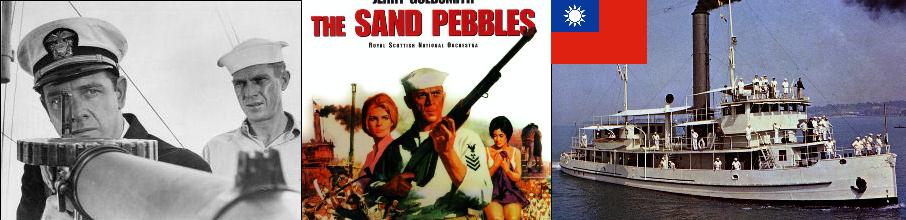
The Sand Pebbles

I watched the movie recently, called “The Sand Pebbles”, which takes place in China in the 1920s.  It’s based on the book of the same name.


 In the 19th century, the US, European countries, and Japan forced China to sign certain treaties which opened the country up to foreign trade and made citizens of those countries, so-called “treaty people”, immune to Chinese law.  The former element was at least partially a coercive deal to allow the British to trade opium to the Chinese for tea, a trade arrangement the Chinese had initially resisted and which resulted in opium addiction amongst the Chinese.  With regard to the latter element, westerners responded that Chinese law lacked due process and defendants were beheaded willy-nilly, so this immunity was not necessarily a bad thing.  Certain ports and cities in China were “treaty ports” with foreign “concessions”.  The Chinese resented this intrusion but were mostly powerless to stop it.  In 1900 the Boxer Rebellion was put down (the movie “55 Days in Peking” (1963), featuring Charlton Heston, David Niven, and Ava Gardner, describes that occasion).  The treaty powers continued to put warships and gunboats in Chinese waters.  In particular, the US Navy’s Yangtze River patrol featured gunboats, many of which had been taken over from the Spanish after the Spanish-American War, though they kept the original Spanish names (it's considered bad luck to rename a ship).  

 GunboatsThese were oversized barges with little in the way of armament (nowhere close to destroyers or cruisers) and very ugly, but they could get by in fairly shallow water.  Most were ancient relics, obsolete trash boats thrown to the river patrol and looked down on by the surface fleet.  An officer sent to a gunboat was in a career shithole.  The river patrol sailors were treated as, and considered themselves, rejects and misfits, by the rest of the Navy.  They often stayed on and shacked up with Chinese women after their service was over.

 Coolies.  The gunboats had an unofficial staff of Chinese “coolies” who did all the menial, unpleasant work (which on most Navy ships would have been done by the sailors themselves), allowing the sailors to live a more leisurely lifestyle.  They were paid in “squeeze” (unofficial kickbacks); they referred to their income from these tasks as their “rice bowl”.  Eventually “gearwheel” pressure forced the coolies off the ships and the sailors had to do their own dirty work.  Sailors are forbidden to marry Chinese; the government will not recognize the marriages and missionaries generally refused to perform ceremonies.  One sailor, Frenchy, wanted to marry his Chinese lover Maily but couldn’t find anyone to actually perform the ceremony.  Chinese have a strange status in the story – many favorable (Po-Han and Maily), many unfavorable (gearwheels – and Cho-Jen is very arrogant) and others fairly neutral.

 Missionaries.  Christians who lived in China and attempted – none too successfully – to convert Chinese to Christianity.  Though I know of many Chinese and Vietnamese Christians, they seem to be a very small minority.  The missionaries hated the gunboats and sailors:  to them, the sailors were immoral scoundrels, bad examples from Christian society which made the missionaries appear to be hypocrites, as most Western sailors were nominally Christian themselves.  The missionaries disagreed with the treaties and took the Chinese side; the gunboats were an embarrassment to them, even if they fled to these gunboats for safety whenever they felt threatened by hostile natives (how convenient, the treaty people would note).  The Navy didn’t particularly like the missionaries either – the gunboats had to protect these people who were rarely grateful and deliberately put themselves in harm’s way by overestimating the locals’ esteem for them.  Given their poor track record and the frequent abuse they suffered from the population they claimed loved them (treaty-favoring businessman to arrogant missionary: “we understand the Chinese don’t like us, but you don’t seem to realize that these people hate you almost as much as they hate us”), it seems the missionaries had an unreasonably favorable opinion of themselves and their status in China.

 Warlords.  At that time (1920s) China was run by different warlords who controlled parts of China.  The central government was fairly weak until Chiang Kai Shek attempted to unify the country and subjugate the warlords.  Warlord armies were lax in discipline and poorly equipped; they seldom fought well, and most disputes were resolved with money (“silver bullets”).   However, the gunboats seemed to get along far better with the warlords than the Nationalists.

 Gearwheel.  In the book, the Kuomintang (KMT)(Nationalists) are referred to as “gearwheel” by the US sailors, based  on the sun in the Nationalist flag which looks to them like a gear wheel.  The KMT stoke up resentment and violence against the gunboats.  Invariably, the gearwheel forces in the story are a bunch of hostile, lying assholes who end up causing problems for the San Pablo and its sailors – far more so than the warlords ever do.

 Bolsheviks.   They had recently won power in Russia and were attempting to expand their influence in China.  Here’s where it gets Byzantine:  Sun Yat-Sen and Chiang Kai-Shek were both courting Stalin’s favor and support, which Stalin did in fact grant, yet there was a growing Chinese Communist Party (CCP), for which Mao Zedong attempted to take control.  The KMT and CCP fought each other, but Stalin didn’t necessarily support the CCP over the KMT; Stalin was more worried about the Japanese and wanted the KMT and CCP to make a common front against the Japanese, whereas Mao wanted to use the Japanese to destroy the KMT. 
            As in Spain, Stalin was less concerned with the ideological purity of his minions and far more concerned about how consistent and reliable they were about following orders from Moscow; “Trotskyist” was the consistent label applied to undeniable Marxists/socialist/communists who defied Moscow’s orders even if they weren’t actually associated with Trotsky himself.  Thus Stalin was more apt to support Chiang Kai Shek if he was willing to do what he asked, whereas Mao tended to appear to him – correctly so – to be an undisciplined, loose cannon who was primarily looking out for his own interests, not even of his own party or country.

 Japanese.  Ironically, in The Sand Pebbles, the KMT work out to be bad guys and the Japanese – allied and among the treaty powers – turn out to be good guys.  This was just years before the invasion of Manchuria in 1931 and the rest of China in 1937.  In the book, the fleet sailors the Sand Pebbles encounter consider the Japs to be rivals, whereas the Sand Pebbles themselves consider the Japs to be friends. 

 Germans and White Russians.  In “55 Days in Peking” the Germans and Russians are among the treaty forces putting down the Boxer Rebellion.  The Germans had been stripped of their treaty privileges after WWI, though when the KMT started harassing, persecuting and killing treaty people in the late 20s, this meant the Germans were actually safer.  In the book, Holman strikes up a friendship with a German engineer, Scharf, who offers a refreshingly different point of view on many of the issues.
            White Russian refugees from the Russian Civil War were stateless “nonpersons” with no treaty rights, and considered by the US to be equal in status to Chinese.  In the book, one of the sailors, Lynch, marries a White Russian woman who uses his Liberty Bond money to buy a tea shop in Shanghai.  Because she’s a “nonperson” the other sailors tell him that as far as the Navy is concerned, he’s not really married.

 Book (1962).  After watching the movie I read the book on my Android Kindle.  It’s a very long book; in print it’s 600 pages.  Somewhat confusingly, the author’s name is Richard McKenna, not to be confused with actor Richard Crenna (see below).  The book features a fictional gunboat, the San Pablo, (a former Spanish ship – they kept the name) of which the crew members called themselves the Sand Pebbles.  The main character is the ship’s engineer, Holman (who the Chinese call “Ho-mang”); in addition to being the protagonist, he’s also one of the most sympathetic characters, easily the “hero” of the story.  Frenchy is a North Carolina sailor who falls in love with a Chinese woman named Maily.  The captain, Lt. Collins, has an impossible job of keeping morale when Coolidge and the missionaries constantly tie the Navy’s hands back in yet more of these inane “you can be shot at but not shoot back” missions the military always hates.  The missionaries are Miss Eckert, the leader Craddock, a teacher Gillespie, and promising Chinese student Cho-Jen.  Holman’s coolie sidekick is Po-Han.

            As is so often the case with books vs. movies, the book goes into considerably more detail of the background and has much more going on than can be effectively done in a movie lasting less than 10 hours.

 Movie (1966). The film itself was made by Richard Wise, the same director as “The Sound of Music”.  Steve McQueen played Holman; Richard Crenna played Lt. Collins; Candice Bergen, (Murphy Brown, and more recently Shirley Schmidt on Boston Legal) younger even than in “Carnal Knowledge”, played Miss Eckert.  The actress who played Maily, Marayat Andriane, went on to write the Emmanuelle books; Po-Han is played by a Japanese actor, Mako.  The movie lagged on for 3 hours, but it was fairly faithful to the book.